E-Invoicing Applicability Under GST: Who Needs It and How It Works
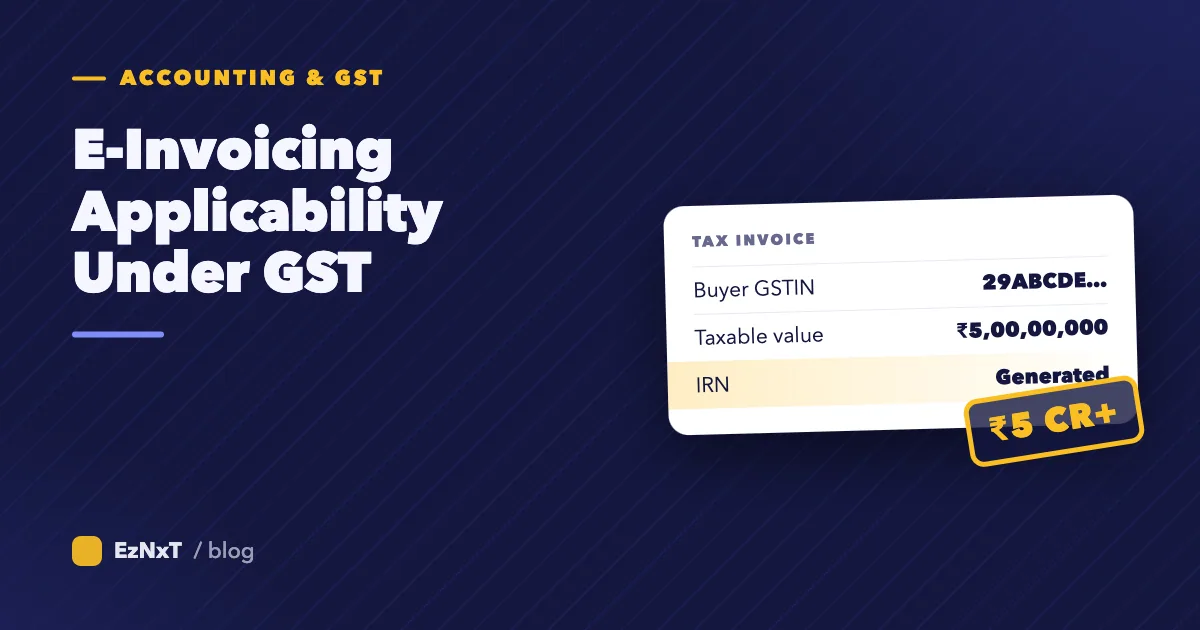
Quick answer: e-invoicing applicability under GST covers businesses whose aggregate annual turnover has exceeded ₹5 crore in any financial year from 2017-18 onwards. They must report B2B invoices, export invoices and credit/debit notes to the Invoice Registration Portal (IRP), which returns an IRN and a signed QR code. B2C invoices are not covered, and some sectors are exempt.
E-invoicing does not mean “emailing a PDF”. It means reporting each eligible invoice to a government-authorised portal, which validates it, registers it and passes the data to the GST system. If you cross the turnover limit and keep issuing ordinary invoices, those invoices are not valid for e-invoicing purposes.
E-invoicing applicability: who must issue e-invoices
| Question | Rule |
|---|---|
| Turnover limit | Aggregate annual turnover (AATO) above ₹5 crore in any financial year from 2017-18 (applies since 1 August 2023) |
| Documents covered | B2B tax invoices, exports, supplies to SEZs, credit notes and debit notes |
| Not covered | B2C invoices (sales to unregistered customers) |
| Once applicable | Continues to apply even if turnover later falls below the limit |
Who is exempt from e-invoicing
- SEZ units (SEZ developers are not exempt)
- Insurance companies, banks and financial institutions including NBFCs
- Goods transport agencies
- Passenger transport services
- Admission to cinema halls (multiplex screens)
- Government departments and local authorities
If you claim an exemption, keep the basis documented; buyers sometimes ask why your invoice has no IRN.
How e-invoicing works, step by step
- Create the invoice in your billing or accounting software in the standard e-invoice schema format.
- Upload the invoice details (JSON) to an Invoice Registration Portal, such as the GST e-invoice portal, directly or through an integration.
- The IRP validates the data and generates the IRN (Invoice Reference Number) and a digitally signed QR code.
- Print or share the invoice with the IRN and QR code on it.
- The data flows automatically into your GSTR-1 and, where transport details are given, an e-way bill can be generated from it.
The 30-day reporting rule
Taxpayers with AATO of ₹10 crore or more must report an invoice to the IRP within 30 days of the invoice date; the portal rejects older invoices. Report invoices on the same day as you raise them and this never becomes a problem.
Common e-invoicing mistakes
- Missing the date you crossed ₹5 crore and continuing with ordinary invoices
- Generating an IRN for B2C invoices, which are outside e-invoicing
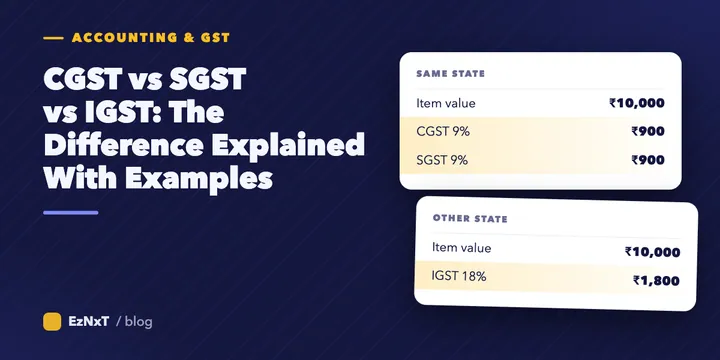
- Wrong buyer GSTIN or place of supply, so the IRP rejects the invoice (see CGST vs SGST vs IGST)
- Editing an invoice after the IRN is generated; cancel within the allowed window or issue a credit note instead
Get the basics right in how to create a GST invoice and how to file GSTR-1.
Frequently Asked Questions
What is the turnover limit for e-invoicing?
E-invoicing applies to businesses whose aggregate annual turnover exceeded ₹5 crore in any financial year from 2017-18 onwards.
Is e-invoicing required for B2C invoices?
No. E-invoicing covers B2B invoices, exports and credit/debit notes. B2C invoices are outside it, though large businesses have separate dynamic QR code requirements for B2C invoices.
What is an IRN in e-invoicing?
The Invoice Reference Number: a unique number generated by the Invoice Registration Portal for each reported invoice, printed on the invoice along with a signed QR code.
Can an e-invoice be cancelled?
An IRN can be cancelled on the portal within a short window (24 hours) after generation. After that, correct the invoice through a credit or debit note.
Does EzNxT generate the IRN?
EzNxT creates GST invoices in an e-invoice-ready format. The IRN itself is generated by the government Invoice Registration Portal.
See EzNxT GST invoicing software or try the free GST invoice generator.